
Authors in Conversation
A two-part series featuring Anne Leigh Parrish and Liz Kellebrew

Writers work alone. When they need to bounce an idea off of someone, it’s usually themselves, wearing their editor or reader hat. Sometimes a trusted friend or family member is happy to read a draft or final manuscript and weigh in. But for the most part, we’re on our own, figuring it out for ourselves, wondering if what we say will resonate with someone.
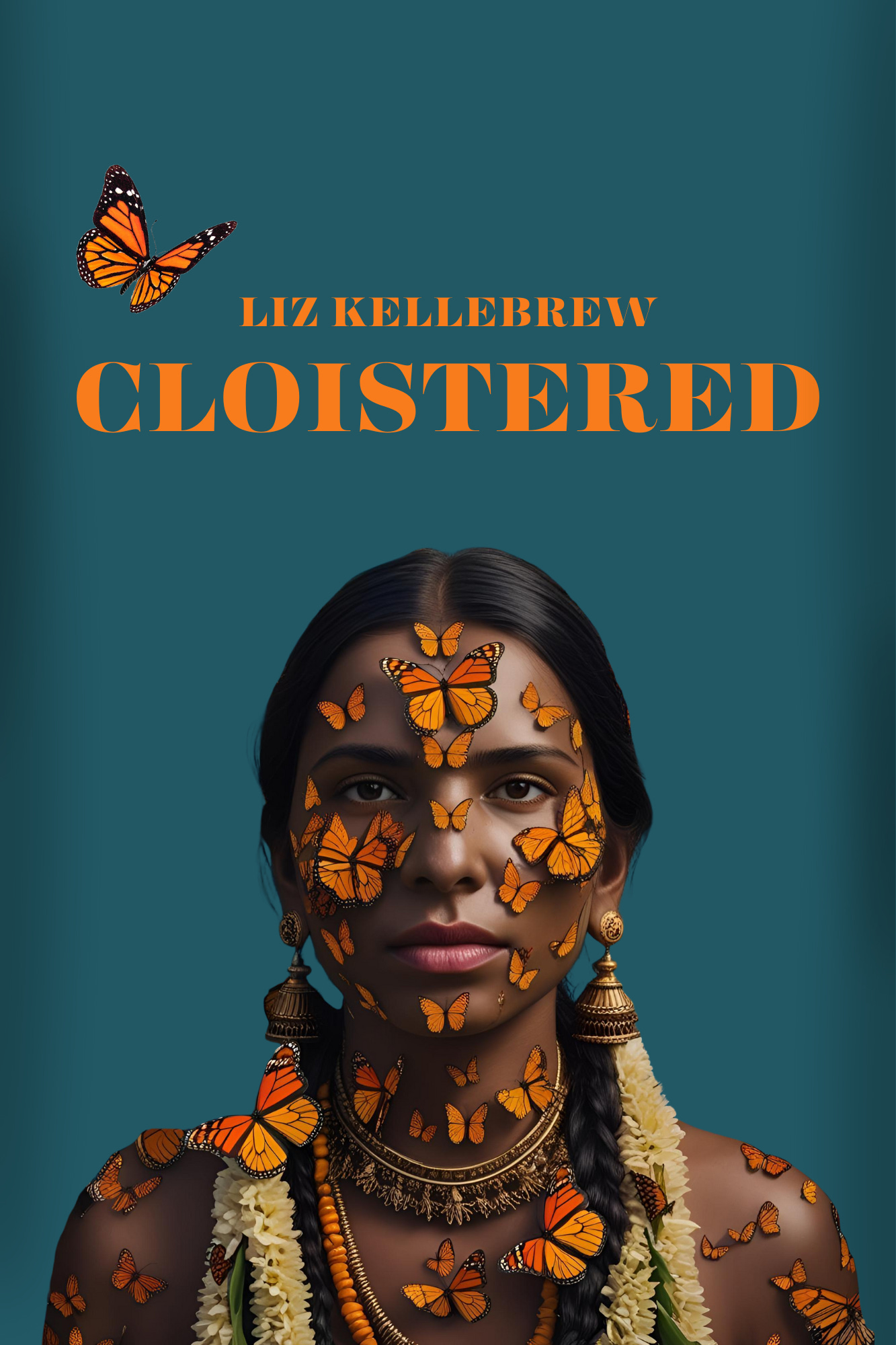
That’s why it’s great to talk with other writers, read their work, share thoughts, and be inspired. And I will say right off, Liz Kellebrew is an inspiring writer. Liz has just released her third book, Cloistered, a flash fiction collection. It’s first rate, the cover is gorgeous, it’s worth every minute of your time. I liked it, in other words. My latest poetry collection, The Banished and the Dead, came out in March, Liz’s book came out in February, so we thought we’d get together and toss each other some questions. I’ll go first.
Your second book, The River People had an expansive sweep to it, looking back in time to a fictionalized past based on the history of your family’s arrival in Washington State. On the other hand, Cloistered is a series of short pieces written during the pandemic, when we were all confined at home so much of the time. While the stories are in no way small, I have to think writing them required a very different mindset. Can you talk about that a bit?
Absolutely. With The River People, I started with historical source material and family stories, and I got curious about the gaps: what was not said in the historical record, not written down for posterity. So while I wrote the book based on the real events described, I also imagined what my ancestors might have thought, felt, and experienced. I wrote scenes that incorporated my own experience of living in the same geographical area with the very different lives they lived.
With Cloistered, the starting point for each story came from my own mind: images, experiences, memories, dreams, imagined scenes. I wanted to write something that flipped through surreal, stunning visuals like a film. I experimented with slipping between different points of view, too. I would start with an impression and follow its twists and turns to its farthest possible logic. It was a freer process because I didn’t feel I had to adhere to a pre-existing version of the truth. But it was similar to writing The River People in that I wrote from multiple points of view, not just my own.
It’s been said that writing short is harder than writing long. The stories in Cloistered are considered flash, short short-stories, that is. What is it like to write economically, with high efficiency, if you will? What is the best part of it, also the worst?
When writing short, you have to abandon the urge to over explain things. It’s an excellent practice in writing in medias res. It’s also an opportunity to frame your story as a snapshot, and what you choose to frame is up to you. Your snapshot could be a moment in time, or a series of events in a character’s life, or a cosmic overview of the forces that draw characters together and apart. Similar to photography, whatever you choose to frame in short fiction, there are some aspects of the story that will fall outside of the frame. You simply can’t fit everything, but in the short form, you don’t want to. You want focus, you want perspective, you want to emphasize certain aspects with an instinct for emotional impact. Maybe the worst part of writing economically is the lack of opportunity to go on longer, broader adventures. If your short story is begging to be taken on an epic quest, for the love of all that’s worthy, do that.
All fiction, and poetry, too, for that matter, bends reality to some extent. Your stories use magical realism, which I think of as remaking reality. Was it hard for you to take that plunge? I mean, did you find yourself thinking, “the reader is never going to believe this,” or did you just take it on faith that they would and let your imagination guide you?
That’s a good question. When I was writing my first draft of Cloistered, I didn’t think about the suspension of disbelief. I thought about flow, and imagery, and emotional truth. Dream logic. I was writing something I would like to read. The doubt came later, during revision. I wondered if I was wasting my time revising something that went this far beyond the realm of convention. My stories were so weird I wasn’t sure if anyone would want to publish them, but now I’m glad I didn’t give up.
Writing relies on rules and conventions geared to keeping the reader located and moving forward with your story. Do you think the rules, such as they are, for poetry are looser than those for prose? I guess what I’m asking is, do you feel freer writing poetry than you do writing a novel or a short story?
An art teacher once told me to learn the rules and learn them well. Then I could break them on purpose, with success. I’ve done this with writing, learning so many rules and conventions over the years that I can’t always say how I know to do what I do. I’ve just practiced a lot, and read a lot of books. Sometimes I make up unconventional rules for myself to make the writing process interesting. With Cloistered, I challenged myself to write stories that flipped through multiple perspectives and in some cases looped back to the beginning at the end.
I actually have less education in poetry than in prose, which is why I write free verse. The ability to jot down a couple lines of free verse in the moment when I’m having all the feelings makes the entry into poetry feel very accessible and auto-narrated. Fiction takes a little more mental distance, getting out of myself and into another character while still tapping into a well of commonly shared experiences and emotions. I find each form rewarding in its own way.
Lastly, can you share one really valuable thing you’ve learned about writing, either about yourself as a writer, or the art form, or even the environment we operate within, which includes publishers, editors, readers, and reviewers?
As a writer, I’ve learned that the end result is almost never what I had in mind when I started out. I’ve learned to be flexible and let the writing process show me what the work wants to be. And OK, this is two things: secondly, everyone who reads your work brings their own responses to it. Your book goes on making new friends without you and sometimes readers will find meanings that you never intended or knew were there. That’s a magical process for me because that means my writing is connecting with people and sparking a dialogue. I love that.
Thank you so much for sharing your thoughts with us, Liz! It’s been great fun.
And thank you all for reading. Find me at www.anneleighparrish.com and my photography at www.laviniastudios.com